

The Art of Letting Go 50 Episode Drama: A Story Etched in Memory and Regret
The Art of Letting Go 50 Episode Drama: A Story Etched in Memory and Regret
Introduction
The Art of Letting Go begins with a haunting premise: Olivia, a woman scarred by years of emotional neglect and betrayal, decides to undergo a surgery that will erase her memories—including the man who once defined her world.
The drama opens in a sterile hospital corridor bathed in pale blue light, where Olivia signs the consent form that seals her fate. With only 14 days left before the procedure, she begins to tie loose ends, not realizing that her husband, Adrian, is about to awaken from the numbness that ruined them both.
Set against a sleek urban backdrop, this 50-episode drama on FlickReels is an emotional labyrinth about memory, time, and the fragility of love. It weaves tragedy and introspection into a love story that questions what remains of us when memories fade—and whether forgetting is truly the same as healing.
The Art of Letting Go 50 Episode Drama — Storyline Overview
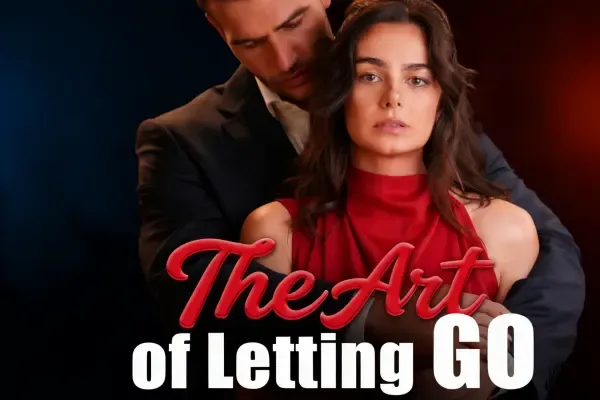
Across 50 episodes, The Art of Letting Go unfolds in three emotional acts: Descent, Reckoning, and Rebirth.
Act I: Descent (Episodes 1–18)
We meet Olivia as the devoted yet unappreciated wife of Adrian Moore—a cold and distant CEO entangled in a toxic love triangle with his ambitious business partner, Celeste. Olivia endures years of emotional betrayal as Adrian pursues success at the cost of intimacy. Her breaking point comes when she discovers his affair through an unsigned letter left on their dining table—an echo of everything left unsaid between them.
These episodes move slowly, focusing on silence, glances, and the suffocating stillness of a marriage dying in plain sight. The cinematography captures Olivia’s isolation through muted colors and reflection shots—her image fragmented in mirrors, her voice lost in empty halls.
Act II: Reckoning (Episodes 19–35)
Olivia’s decision to erase her memories throws Adrian into turmoil. For the first time, the aloof husband is forced to confront what he’s about to lose—not a wife, but the woman who silently carried the weight of his ambition. The love triangle intensifies when Celeste realizes that Adrian’s heart, despite everything, still beats for Olivia.
A series of emotional confrontations follows. One of the most unforgettable scenes takes place on a rain-soaked street, where Adrian chases Olivia, begging for one last chance. She turns, eyes hollow, and whispers, “You had years to find me. You waited until I disappeared.”
This act lays bare the tension between pride and vulnerability, between love remembered and love lost too late.
Act III: Rebirth (Episodes 36–50)
The final stretch of the drama balances between hope and tragedy. As Olivia’s surgery date nears, Adrian tries to recreate the moments that once defined their love—revisiting places, playing songs, cooking her favorite meals—desperate to make her remember.
Yet Olivia’s resolve only strengthens. In one poignant episode, she revisits her old art studio and paints a faceless portrait of Adrian—a symbolic farewell to the version of herself that once lived for him.
The finale is devastatingly quiet. On the day of her surgery, Adrian whispers, “If you must forget, let me be the first name to fade.” When she wakes, her mind is blank—but her heart, somehow, still reacts to his voice. The screen fades to white, leaving viewers suspended between sorrow and the faintest spark of renewal.
The Art of Letting Go 50 Episode Drama — Character Analysis
Olivia Bennett — The Courage to Erase
Olivia is the embodiment of quiet resilience. Played with haunting grace by Elena Zhou, she carries the weight of emotional decay with restraint rather than rage. Her strength lies not in defiance but in her ability to choose peace over pain.
Throughout the drama, Olivia’s character evolves from passive endurance to active liberation. Her decision to undergo memory erasure isn’t an act of self-destruction but of self-preservation. She is a woman reclaiming agency over her own narrative—choosing oblivion over the torment of unreciprocated love.
Her artistic sensibility becomes a metaphor for her emotional world—she paints to remember, then paints to forget. Each brushstroke mirrors the rhythm of letting go.
Adrian Moore — The Man Who Realized Too Late
Adrian, portrayed by Julian Park, is a man imprisoned by his own pride. Initially cold, methodical, and emotionally distant, his character represents the modern tragedy of success without soul.
In the beginning, he views love as a distraction from his career. But when faced with Olivia’s departure, his mask cracks. The transformation from arrogance to anguish is gradual yet heart-wrenching. His greatest punishment is awareness—realizing too late that devotion unacknowledged is love wasted.
Julian Park’s nuanced performance makes Adrian simultaneously detestable and deeply human. His final breakdown, when he kneels by Olivia’s hospital bed whispering, “Forget the pain, but not the way I loved you—too late,” remains one of the most haunting moments in the series.
Celeste Lin — The Third Corner of a Broken Heart
Celeste is more than a mere antagonist. As Adrian’s colleague and lover, she represents ambition’s shadow side—driven, brilliant, but morally unanchored. What makes Celeste fascinating is her self-awareness: she knows she’s the wrong choice but clings to him anyway, because power has become her addiction.
Her eventual downfall is poetic justice. When Adrian rejects her for the woman he destroyed, Celeste’s final monologue—“You loved her for her silence; you’ll miss her for the same”—encapsulates the irony of love built on neglect.
Thematic Depth and Symbolism
Memory and Identity
The central theme—erasing memory as an act of healing—raises profound philosophical questions. Is forgetting the same as forgiving? Does love exist without memory? The drama suggests that memories, even painful ones, are essential to identity. By losing them, Olivia risks erasing not only her pain but her humanity.
Love and Time
Time in The Art of Letting Go is portrayed as both healer and thief. The countdown of 14 days becomes a metaphor for mortality—every second a reminder that love, once taken for granted, cannot be resurrected by regret.
Betrayal and Self-Love
While betrayal fuels the narrative tension, the true betrayal lies in self-abandonment. Olivia’s journey is not about avenging Adrian’s affair but about forgiving herself for staying too long in a loveless place.
Cinematic and Narrative Style
Visually, the series stands out for its minimalist melancholy. Each frame feels like a painting—muted colors, soft lighting, and empty spaces that mirror emotional voids. The director uses silence as a narrative tool: long pauses, lingering shots of rain, fading music—all heighten the sense of emotional suffocation.
The pacing is deliberate, giving viewers time to breathe and ache with the characters. The score, composed by Renee Wu, weaves piano and cello themes that echo Olivia’s inner turmoil.
One standout scene uses visual contrast brilliantly: Olivia burning old letters in her studio, while Adrian frantically rewinds their home video in his office. The dual imagery of erasure vs. remembrance perfectly captures the drama’s essence.
The Art of Letting Go 50 Episode Drama — Key Recommended Episodes
Episode 12: Olivia discovers the letter revealing Adrian’s betrayal. The silence between them is louder than any argument.
Episode 27: The rain confrontation scene—an emotional masterpiece of cinematography and performance.
Episode 33: Adrian begins recording video messages for Olivia, hoping she’ll one day remember him.
Episode 41: Olivia paints the faceless portrait. Her tear-stained hands are a metaphor for love dissolving into art.
Episode 50 (Finale): The surgery sequence—subtle, devastating, and ambiguous. It ends not with loss, but the faint shimmer of a new beginning.
The Art of Letting Go 50 Episode Drama — Why It Resonates
This drama resonates because it touches a universal nerve: the fear of being forgotten and the pain of letting go. It’s a mirror for anyone who has ever loved too deeply or too late.
Unlike typical romantic dramas that chase reconciliation, The Art of Letting Go Drama dares to embrace the tragedy of closure. Its bittersweet ending reminds us that sometimes, healing doesn’t come from reunion but from release.
The Art of Letting Go 50 Episode Drama — Viewer Reflection
Watching Olivia’s transformation is cathartic. Her courage to face oblivion becomes a metaphor for emotional rebirth. Viewers are left questioning their own attachments—what would they erase if given the chance?
The drama’s emotional intelligence lies in its refusal to moralize. It doesn’t condemn Adrian or glorify Olivia. Instead, it portrays love as a human imperfection—a force that both saves and scars.
Conclusion
The Art of Letting Go is a meditation on the anatomy of love and loss. Over 50 episodes, it transforms pain into poetry, heartbreak into introspection.
Its ending, while tragic, carries quiet hope. Love, even when forgotten, leaves traces—the way music lingers in silence. And in Olivia’s blank yet peaceful eyes, we glimpse what true liberation looks like.
Keywords
The Art of Letting Go 50 Episode Drama, emotional erasure, romantic tragedy, BE ending, love triangle, betrayal, redemption, memory and identity, Olivia and Adrian, psychological romance drama
FAQs
1. How many episodes are in The Art of Letting Go?
There are 50 episodes in total, divided into three emotional arcs—Descent, Reckoning, and Rebirth.
2. Is The Art of Letting Go a happy ending drama?
No. It follows a bittersweet BE (Bad Ending) structure, focusing on emotional closure rather than reconciliation.
3. What is the main theme of The Art of Letting Go?
The drama explores memory, love, and self-liberation—asking whether forgetting someone is the same as moving on.
4. Who are the main actors?
Elena Zhou stars as Olivia Bennett, and Julian Park plays Adrian Moore, with a supporting performance by Rachel Lin as Celeste.
5. Why is The Art of Letting Go so popular?
Its deep emotional realism, strong character arcs, and cinematic storytelling make it stand out among conventional romantic dramas.
Popular Articles
- Captive Love from the Mob Boss: Full Streaming Guide
- Best 5 Short Drama Apps in 2025: Streaming Anywhere
- Where to Watch Short Chinese Dramas for Free: Romance & More
- 10 Popular Short Dramas Currently Streaming on FlickReels
- How to Use the FlickReels App: A Step-by-Step Guide
- Top 10 New Short Dramas on FlickReels to Stream in May 2025
Watch Short Dramas

My Husband's Best Friend Claims Me

When love returns

Starlit Hearts

He is not your husband

Pregnant and Promoted(Dubbed)

Love at Fifty(Dubbed)
Download App